Less is more: a house of three materials
What enriches a space is what you take away, not what you add. Here is why we built the interior of the Şile Forest House with only three materials.
At our first meeting, the clients of the Şile Forest House brought a list: a marble worktop, walnut panelling, brass fittings, patterned tiles. All beautiful materials. By the end of the meeting, three words remained: limewash, oak, concrete.
Why fewer
Every new material means another joint where it meets the previous one. Joints carry the heaviest load for both the eye and the budget: the lines where cladding ends, plaster begins, one colour turns into another. Reduce the number of materials and these lines disappear; the space calms down.
Three materials, three jobs
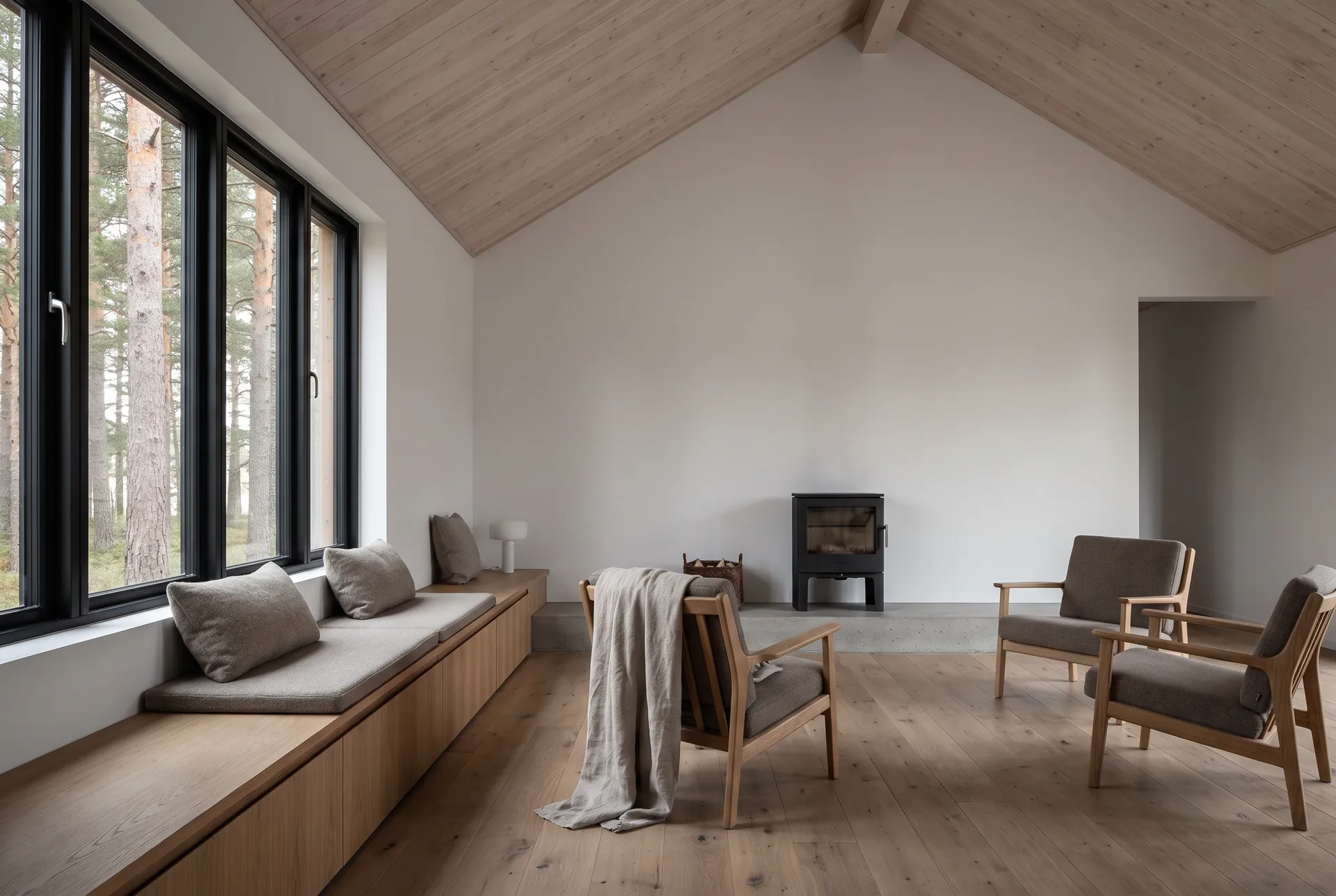
White limewash on walls and ceilings. It reflects light, breathes, and years later is renewed with a single coat.
Oiled oak on the floor, the stair, the kitchen and the furniture: everything the hand touches. We chose oil over varnish so scratches can be sanded and re-oiled.
Fair-faced concrete on the plinth, the hearth and in the bathrooms: everything that meets water or fire.
Furniture is part of the space
The long bench in the living room continues the window sill. The kitchen worktop is cut from the same oak as the stair treads. We designed most of the furniture as part of the building rather than as separate objects, so there was less to buy when the family moved in.
Simple, not cold
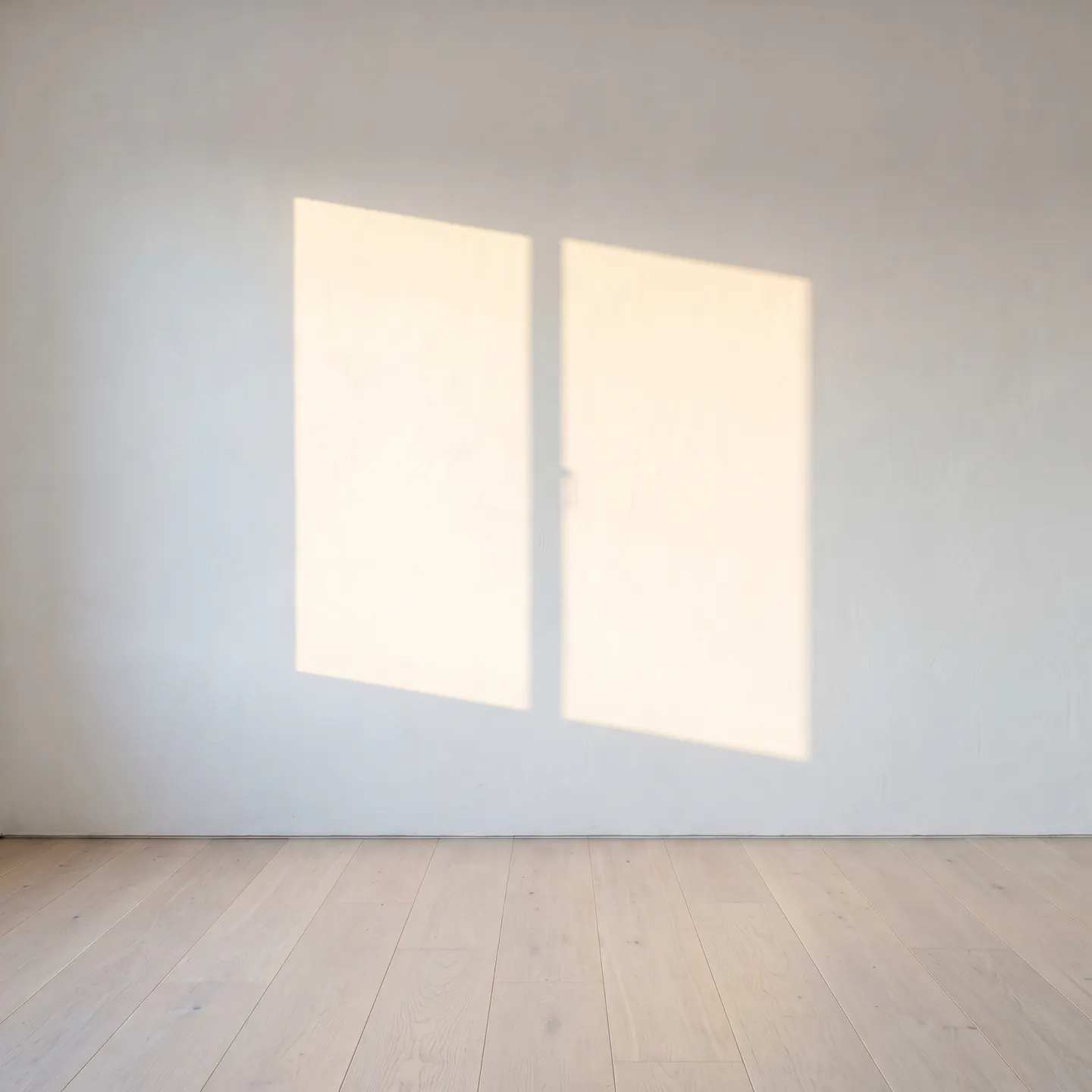
The risk of working with few materials is a sterile interior. We balance it with texture: the uneven surface of the limewash, the grain of the oak, the formwork marks of the concrete. And with light: the same white wall looks bluish in the morning and honey-coloured in the late afternoon.
When the clients wrote to us a year later, they said they had never missed anything on their original list. For us, there is no better feedback.